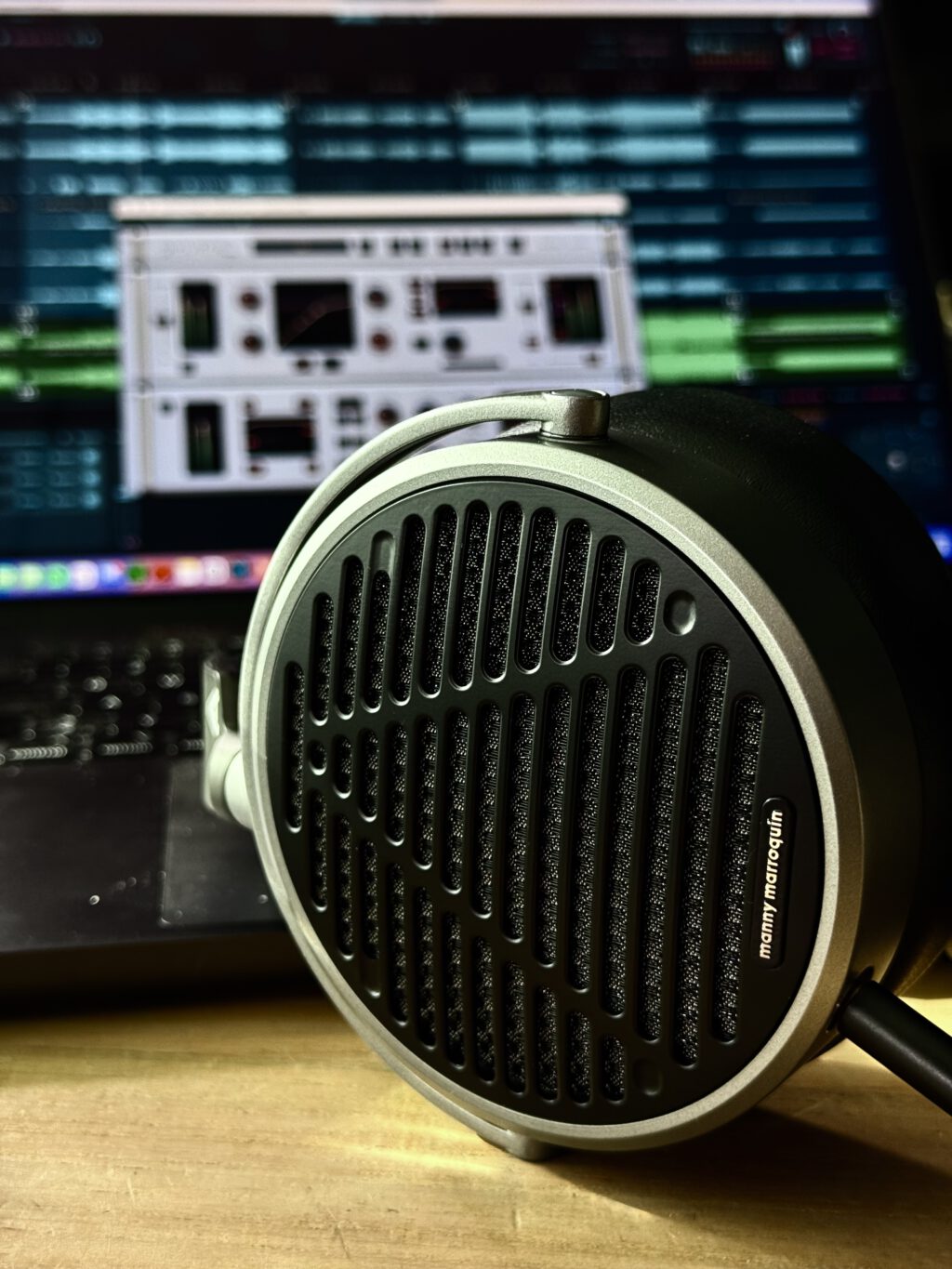
A Review of the Audeze MM-100
In the crowded world of studio headphones, very few products manage to bridge the gap between technical precision and musical enjoyment. Most headphones tend to lean heavily toward one side of the spectrum. Some are ruthlessly analytical, designed purely to expose flaws in a mix, but become fatiguing or uninspiring during long sessions. Others sound lush and exciting but exaggerate frequencies in ways that make them unreliable for professional work.
The Audeze MM-100 somehow manage to avoid both extremes. They are accurate without sounding sterile, revealing without becoming harsh, and musical without sacrificing honesty. Designed in collaboration with acclaimed engineer Manny Marroquin, the MM-100 feels like a deliberate attempt to bring high-end planar magnetic monitoring into a more accessible and practical format for working musicians, producers, mix engineers, and mastering professionals.
After spending significant time with them in both creative and critical listening environments, one conclusion becomes very clear: the MM-100 is not merely a good pair of studio headphones. It is one of the most convincing tools currently available for mixing and mastering in its price range. And perhaps even more surprisingly, guitars sound absolutely fantastic through them.
First Impressions and Build Quality
The first thing you notice when picking up the MM-100 is that they feel purposeful. There is no exaggerated luxury aesthetic, no glossy gimmicks, and no attempt to imitate consumer hi-fi fashion. Instead, the design communicates durability and professionalism. The industrial styling is unmistakably Audeze: clean metal construction, large planar drivers, open-back architecture, and a sense that every component exists for a reason.
Compared to some of Audeze’s heavier flagship models, the MM-100 is refreshingly manageable in terms of weight. That matters more than people often realize. Mixing sessions can easily stretch across several hours, and mastering requires extended periods of microscopic listening. Heavy headphones become a burden quickly. The MM-100 strikes an excellent balance between robustness and comfort, remaining secure without creating neck fatigue.
The headband distributes weight effectively, while the earpads provide enough softness for long sessions without becoming overly plush or isolating. Because these are open-back headphones, they also breathe well, reducing the “sealed pressure” feeling common in closed-back studio models.
Everything about the construction suggests longevity. The metal frame inspires confidence, the detachable cable is practical for studio environments, and the replaceable components make the MM-100 feel more like professional equipment than disposable consumer electronics.
Planar Magnetic Performance
To understand why the MM-100 performs so well for professional audio work, it helps to understand the nature of planar magnetic drivers.
Unlike conventional dynamic drivers, planar magnetic technology uses an ultra-thin diaphragm suspended within a magnetic field distributed across a larger surface area. The result is typically faster transient response, lower distortion, and greater clarity across the frequency spectrum.
In practice, what this means is simple: the MM-100 reacts incredibly quickly to audio information.
Tiny details emerge effortlessly. Compression artifacts become easier to detect. Reverb tails remain clearly separated from the source material. Stereo imaging gains precision. Low-end information feels tighter and more controlled rather than bloated or artificially hyped.
Many headphones claim to be “detailed,” but often that detail comes from boosting treble frequencies to create the illusion of clarity. The MM-100 does not rely on that trick. Instead, it delivers genuine resolution. You hear more because the driver itself is capable of reproducing information more accurately.
That distinction matters enormously in mixing and mastering.
Mixing with the MM-100
The greatest compliment you can give studio headphones is that they help you make decisions confidently. The MM-100 excels precisely because it minimizes uncertainty.
When balancing instruments in a dense arrangement, the stereo field feels extremely stable and coherent. Panning decisions translate predictably. Reverbs sit naturally in space rather than collapsing into indistinct haze. Delays and modulation effects become easier to place precisely within the mix.
The midrange performance deserves special praise. Many headphones either recess the mids to sound more exciting or push them aggressively forward to simulate “studio neutrality.” The MM-100 avoids both tendencies. Vocals, guitars, snares, synths, and pianos occupy space realistically and proportionally.
This becomes especially important during EQ work. Subtle cuts and boosts are immediately audible, allowing surgical adjustments without second-guessing. Problem frequencies reveal themselves quickly, but the presentation never becomes fatiguing.
Low-end monitoring is another area where the MM-100 impresses. Bass is deep, extended, and accurate without excessive emphasis. You can hear sub information clearly, but the headphones never exaggerate it for dramatic effect. This honesty makes kick drum and bass relationships significantly easier to manage.
Many headphones either underrepresent the sub frequencies or artificially inflate them. Both scenarios create translation problems when moving between headphones, studio monitors, car systems, and streaming playback devices. The MM-100 maintains enough neutrality that mixes tend to carry over reliably into other environments.
That reliability is perhaps its strongest attribute overall.
Why the MM-100 Is Excellent for Mastering
Mastering demands a level of precision that exposes weaknesses in most headphones almost immediately. Slight tonal imbalances, harsh resonances, transient smearing, or poor stereo imaging become major obstacles when making final adjustments.
The MM-100 performs remarkably well under this pressure.
Its transient response allows compression changes to be heard clearly even at subtle settings. Limiter behavior becomes easier to evaluate. Stereo width processing remains transparent and predictable. Harmonic saturation can be judged accurately instead of becoming exaggerated or masked.
One particularly impressive characteristic is how the headphones handle upper-mid and high-frequency content. Many studio headphones become sharp or brittle during mastering work, especially when dealing with already-bright material. The MM-100 retains clarity without crossing into harshness.
This makes long sessions significantly less fatiguing.
Fatigue is one of the hidden enemies of mastering. Once your ears become tired, decision-making deteriorates rapidly. Engineers start compensating for discomfort rather than responding objectively to the material. Because the MM-100 remains smooth while still highly detailed, it encourages longer periods of focused listening without mental exhaustion.
Another major advantage is separation. Complex mixes remain organized even under dense arrangements. Instead of collapsing into congestion, individual elements maintain identity and placement. This level of resolution helps reveal masking issues that may otherwise go unnoticed.
Mastering engineers often describe certain monitoring systems as “truthful.” The MM-100 earns that description.
Guitars Sound Absolutely Incredible
While the MM-100 shines as a professional reference tool, it also has a genuinely inspiring musical side — particularly when it comes to guitars.
Electric guitars sound alive through these headphones.
There is a tactile quality to distorted tones that feels unusually realistic. Palm-muted riffs have weight and impact without becoming muddy. High-gain textures remain articulate and layered instead of collapsing into fizzy noise. Pick attack comes through with exceptional precision.
Clean tones are equally impressive. Chords retain shimmer and dimensionality, while subtle finger movements and dynamic variations become highly expressive. The headphones capture the interaction between amplifier, cabinet, microphone, and player with remarkable realism.
For guitarists using amp modelers or plugins, this becomes especially valuable. Tools like the Neural DSP Quad Cortex, Line 6 Helix, or modern software amp simulations benefit enormously from accurate monitoring. The MM-100 reveals the nuances of cabinet impulse responses, gain staging, microphone positioning, and modulation effects with stunning clarity.
Acoustic guitars also sound exceptional. String articulation feels natural and immediate. Harmonic overtones remain rich and detailed without becoming brittle. Fingerstyle performances gain intimacy and realism.
In many ways, the MM-100 captures the emotional qualities of guitar tones just as effectively as the technical details.
That combination is rare.
Soundstage and Imaging
Open-back headphones often excel in soundstage reproduction, and the MM-100 continues that tradition convincingly.
The listening experience feels spacious without becoming artificially exaggerated. Instruments occupy believable positions rather than sounding stretched unnaturally wide. Depth perception is especially impressive. Front-to-back layering remains coherent, making it easier to evaluate reverbs, delays, and ambient textures.
Imaging precision is among the best qualities of the headphone overall. Tiny spatial adjustments are immediately noticeable, which is invaluable during mix balancing.
This becomes particularly useful when working on cinematic music, orchestral arrangements, ambient production, or complex rock mixes with layered guitars and vocal harmonies.
Instead of hearing a flat wall of sound, the MM-100 presents a three-dimensional environment.
Musical Enjoyment vs Studio Accuracy
One of the most fascinating aspects of the MM-100 is that it succeeds both as a professional tool and as a genuinely enjoyable listening headphone.
This balance is harder to achieve than it sounds.
Many “reference” headphones become emotionally uninvolving because they prioritize technical exposure above everything else. Conversely, many hi-fi headphones sacrifice neutrality for excitement.
The MM-100 occupies a compelling middle ground. It tells the truth, but it tells the truth musically.
Albums remain enjoyable. Recordings retain emotional impact. Bass still feels satisfying. Vocals still sound human and expressive. The technical precision never strips away the artistry of the music itself.
That quality matters for creative work. Producers and engineers do not merely analyze sound; they respond emotionally to it. A monitoring system that kills inspiration becomes counterproductive no matter how accurate it may be.
The MM-100 avoids that trap beautifully.
Comparison to Other Studio Headphones
The MM-100 competes in a fascinating segment of the market because it challenges assumptions about what is possible at its price point.
Compared to many traditional dynamic-driver studio headphones, the MM-100 offers noticeably faster transient response and cleaner separation. Low-end definition feels tighter, and stereo imaging appears more precise.
Against some ultra-clinical reference headphones, the MM-100 sounds more natural and less fatiguing. It avoids the icy, hyper-etched presentation that can make certain analytical headphones exhausting over time.
Within Audeze’s own lineup, the MM-100 obviously does not attempt to replace flagship models like the Audeze LCD-X. However, it captures much of the same planar magnetic philosophy in a lighter, more affordable, and more accessible format.
That accessibility is important because it opens the Audeze sound to musicians and engineers who may not want to invest in significantly more expensive monitoring systems.
Potential Drawbacks
No headphone is perfect, and the MM-100 does have limitations depending on the user’s needs.
Because it is open-back, isolation is minimal. These are not headphones for tracking vocals in the same room as an active microphone. Sound leakage is significant, and external noise enters freely. They are designed primarily for controlled listening environments.
Some listeners may also prefer slightly more low-end impact for casual listening, especially if they are accustomed to consumer-oriented headphones with elevated bass response. The MM-100 prioritizes accuracy over dramatic coloration.
Additionally, planar magnetic headphones often benefit from decent amplification. While the MM-100 is relatively efficient compared to some older planar designs, pairing it with a quality audio interface or headphone amplifier helps unlock its full potential.
Still, these are reasonable trade-offs given the headphone’s intended professional focus.
Final Verdict
The Audeze MM-100 represents an unusually successful blend of precision, musicality, comfort, and professional practicality.
For mixing and mastering, it delivers the qualities engineers need most: clarity, balance, detail retrieval, transient accuracy, and trustworthy translation. It reveals problems without sounding punishing. It encourages confident decisions rather than endless second-guessing.
At the same time, it remains deeply enjoyable to listen to. Music retains emotion, energy, and depth. And for guitarists in particular, the experience is outstanding. Distorted tones feel powerful and articulate, clean sounds shimmer beautifully, and acoustic instruments gain realism and intimacy.
The MM-100 does not merely function as a monitoring device. It becomes an extension of the creative process itself.
In a market filled with headphones that either chase sterile neutrality or exaggerated excitement, the MM-100 finds a remarkably intelligent balance between the two. It is honest without being cold, analytical without being fatiguing, and professional without sacrificing musical enjoyment.
For anyone serious about mixing, mastering, or simply experiencing guitar tones at their absolute best, the MM-100 is an easy recommendation.
You may also like
-
Its name implies no real Player should even think about it for a split second: Loopy Pro!
-
Seattle! Grunge Vibes & Guitar Culture
-
Audeze LCD-S20 – Precision headphone monitoring for a perfect “pocket”, intonation, and no bleed!
-
Fiedler Audio Launches Mastering Console 2.0 — A truly game-changing Major Upgrade to Dolby Atmos Mastering
-
Fiedler Audio armada wraps VST3 Plug-Ins for any Immersive Format