More Than a Looper: A New Kind of Guitar Rig
For decades, guitarists have built their rigs around hardware. First came the amplifier, then the pedalboard, then perhaps a multi-effects processor, a dedicated looper, backing track player, MIDI controller, mixer, and finally a laptop if the performance demanded additional flexibility.
Loopy Pro quietly challenges that entire concept.
At first glance, it appears to be “just another looping app” for iPad. Spend a few hours with it—or better yet, watch Jack Skuse’s outstanding Loop With Jack series—and it quickly becomes clear that this description barely scratches the surface. Loopy Pro isn’t simply a looper. It is a modular live-performance environment that happens to include one of the most capable looping engines available today.
For guitarists, that distinction changes everything.
The Guitar Rig Reinvented
Jack Skuse demonstrates a philosophy rather than a collection of features.
Instead of adding Loopy Pro to an existing guitar rig, he gradually replaces the rig itself.
The dedicated looper disappears.
The backing track player disappears.
The mixer disappears.
The effects host disappears.
Eventually, even the traditional idea of a pedalboard begins to dissolve.
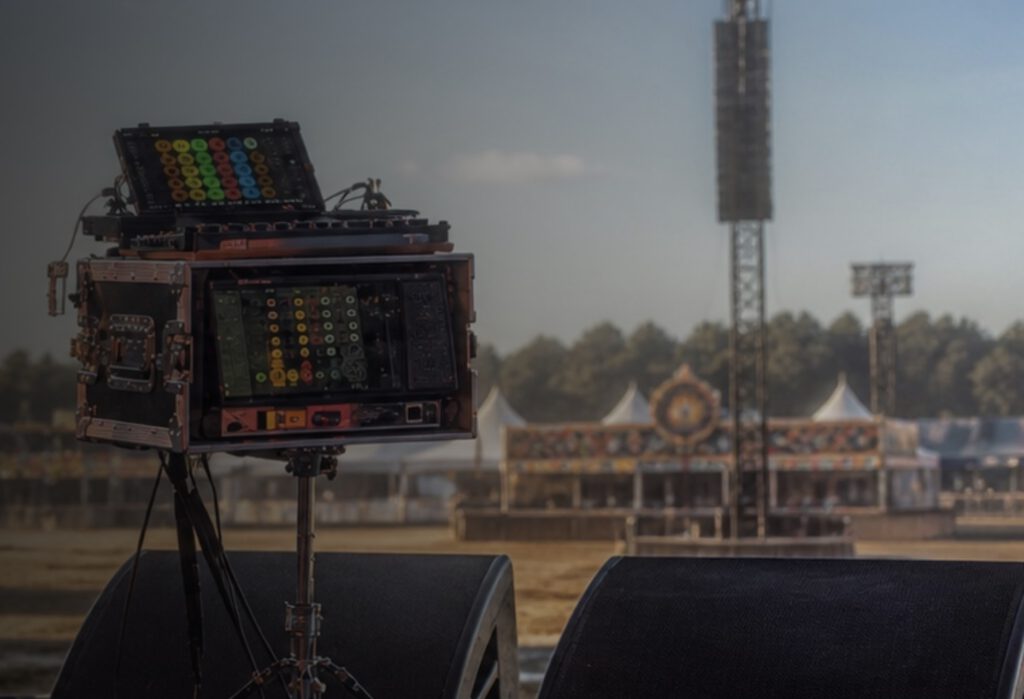
What remains is an iPad, an audio interface, a MIDI foot controller and Loopy Pro acting as the brain of the entire performance system.
Remarkably, this isn’t presented as a compromise. It feels like an upgrade.
Hosting an Entire Guitar Ecosystem
One of Loopy Pro’s greatest strengths is that it doesn’t force guitarists into its own sound.
Instead, it hosts almost anything.
Whether you’re running Neural DSP, Tonex, FAC effects, Nembrini amplifiers, Eventide processors, Overloud simulations or dozens of AUv3 plugins, Loopy Pro simply becomes the environment that connects everything together.
Unlike many hardware loopers that process the entire signal chain as one block, Loopy Pro allows every channel to have its own processing, routing, recording behaviour and monitoring path.
That means a clean rhythm guitar can remain untouched while a lead guitar receives a completely different amplifier, different delays and modulation. Vocals can have independent processing. Synths, keyboards, drum instruments and backing tracks all coexist inside the same project without stepping on each other.
In practical terms, it feels much closer to operating a DAW than a looper—except it is designed for live performance.
Routing Without Limits
Perhaps the biggest surprise is the routing.
Traditional loop pedals usually dictate a fixed signal flow. Guitar goes in. Loop comes out. Effects happen before or after.
Loopy Pro removes almost all of those restrictions.
Signals can be split.
Processed in parallel.
Recorded pre-effects.
Recorded post-effects.
Sent to multiple destinations.
Returned into other processing chains.
Combined with software instruments.
Mixed independently.
For experienced players, this is where Loopy Pro becomes genuinely exciting.
It enables workflows that would require extensive MIDI programming, multiple hardware processors and complex mixers in the physical world.
A Looper That Thinks Like a Musician
The looping itself deserves praise.
Recording options are extraordinarily flexible.
Threshold recording.
Retrospective recording.
Quantised recording.
Free recording.
Automatic overdubs.
Multiple synchronized loops.
Independent loop lengths.
Follow actions.
Song sections.
Scene changes.
Nearly every action can trigger another action.
Instead of forcing musicians into one workflow, Loopy Pro adapts to individual performance styles.
For singer-songwriters, that means effortless verse/chorus arrangements.
For ambient players, evolving soundscapes.
For progressive musicians, complex synchronized structures.
For improvisers, almost unlimited experimentation.
The Interface Advantage
One criticism often directed at sophisticated hardware loopers is menu diving.
Jack Skuse repeatedly compares his previous hardware experience with the freedom offered by Loopy Pro’s visual interface.
The difference is dramatic.
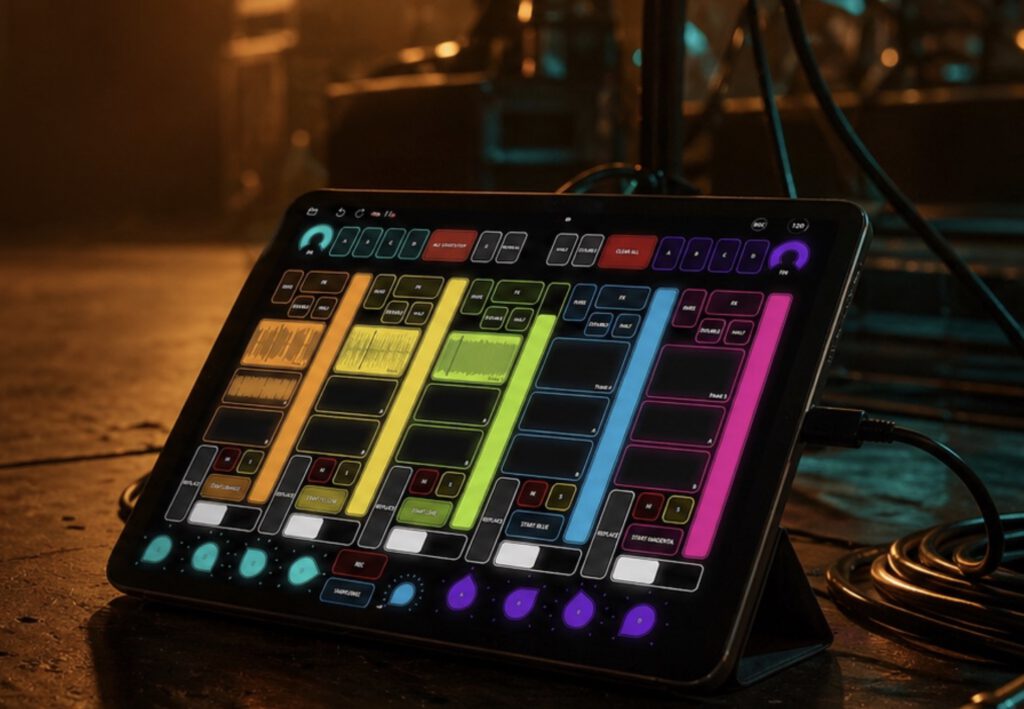
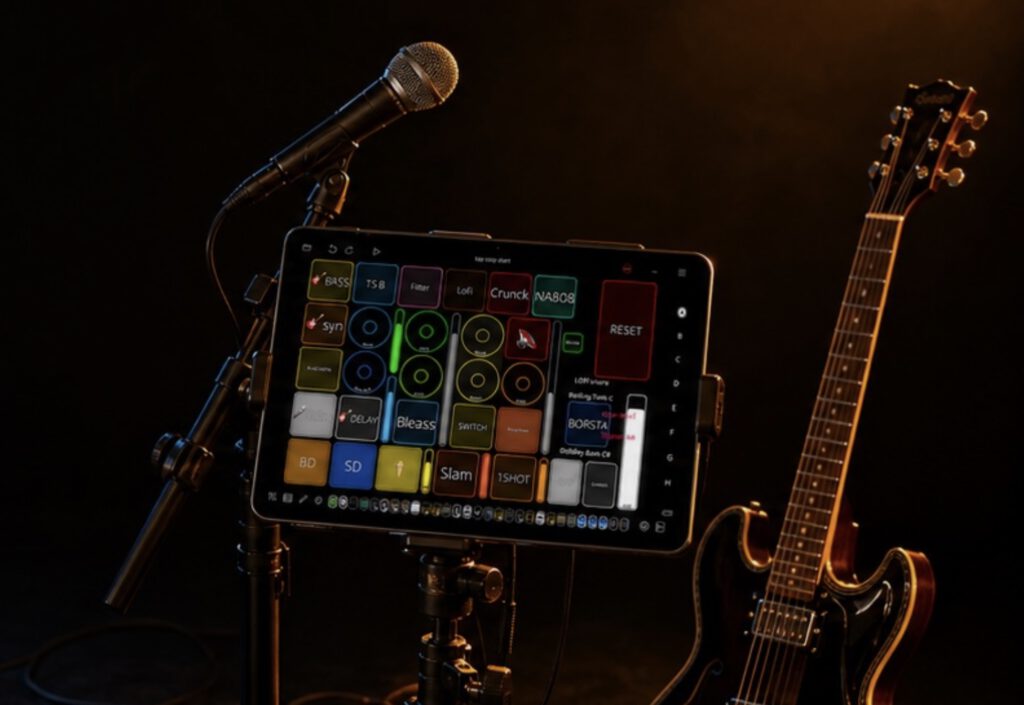
Everything important is visible.
Buttons can be enormous.
Colours become meaningful.
Meters provide immediate feedback.
Custom layouts can be created for different performances.
Instead of learning the manufacturer’s workflow, musicians build their own.
That may be Loopy Pro’s single biggest innovation.
The interface adapts to the player—not the other way around.
MIDI Done Right
Modern guitar rigs increasingly rely on MIDI, yet programming many devices remains frustrating.
Loopy Pro approaches MIDI more like software automation than traditional controller mapping.
Almost every parameter can be assigned.
Actions can trigger multiple commands.
Footswitches become context-sensitive.
One switch can perform entirely different tasks depending on the current song section.
Expression pedals can simultaneously control volume, delay feedback and filter cutoff.
The result is a level of performance integration rarely seen outside expensive touring systems.
Surprisingly Stable
One concern naturally arises.
Can an iPad really replace dedicated hardware?
Jack’s long-term use suggests that it can.
His rig has evolved into a complete live-performance platform centred on Loopy Pro rather than a collection of separate devices. That confidence says more than any specification sheet.
Modern iPads deliver remarkably low latency, and the software has matured into a dependable environment for demanding live use when paired with a quality audio interface and sensible project design.
Is It Perfect?
Not quite.
Its greatest strength is also its greatest challenge.
Loopy Pro can do almost anything.
That means new users may initially feel overwhelmed.
Unlike hardware pedals that intentionally simplify the experience, Loopy Pro rewards curiosity and experimentation.
It is less an appliance and more a creative platform.
Fortunately, this is precisely where the Loop With Jack tutorial series becomes invaluable. Rather than presenting isolated features, Jack explains complete musical workflows, making the software approachable for guitarists who may never have worked with advanced routing or software-based rigs before.
Final Thoughts
Calling Loopy Pro a “loop pedal” is like calling a modern recording studio a tape recorder.
Yes, it loops brilliantly.
But that is only the beginning.
It is simultaneously a mixer, effects host, performance controller, MIDI brain, playback system, recording environment and live production platform.
For guitarists willing to embrace an iPad-based workflow, Loopy Pro represents one of the most flexible and forward-thinking performance systems currently available. It combines the openness of a DAW with the immediacy required on stage, while allowing musicians to build a rig that reflects their own creative process instead of adapting to someone else’s hardware limitations.
After watching Jack Skuse’s extensive demonstrations, one conclusion becomes difficult to avoid:
Loopy Pro isn’t trying to compete with traditional loop pedals.
It’s quietly replacing them—and, in many cases, much of the rest of the guitar rig along with them.
You may also like
-
Seattle! Grunge Vibes & Guitar Culture
-
Audeze LCD-S20 – Precision headphone monitoring for a perfect “pocket”, intonation, and no bleed!
-
The Headphone Dilemma! For Recording, Mixing, Mastering – The Audeze MM-100 is the budget friendly solution.
-
Fiedler Audio Launches Mastering Console 2.0 — A truly game-changing Major Upgrade to Dolby Atmos Mastering
-
Fiedler Audio armada wraps VST3 Plug-Ins for any Immersive Format