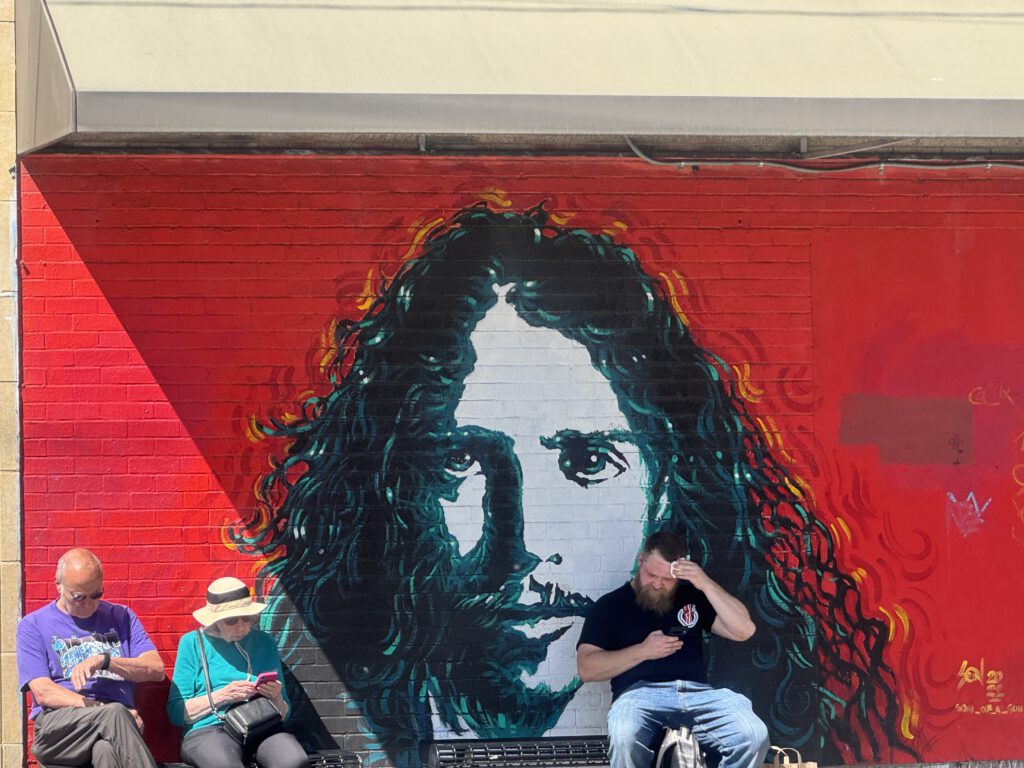
Seattle isn’t a city that explains itself from observation decks. Its identity is written in guitar feedback, basement rehearsal rooms, and the legacy of a scene that changed rock music forever. This is where grunge emerged and became the voice of a generation. Today, institutions like KEXP and Sub Pop still shape the city’s musical heartbeat, while destinations such as Emerald City Guitars, Easy Street Records, and MoPOP keep the mythology alive for musicians making the pilgrimage to the Pacific Northwest.
Story and Pics by Michael Krüger & Bettina Bormann
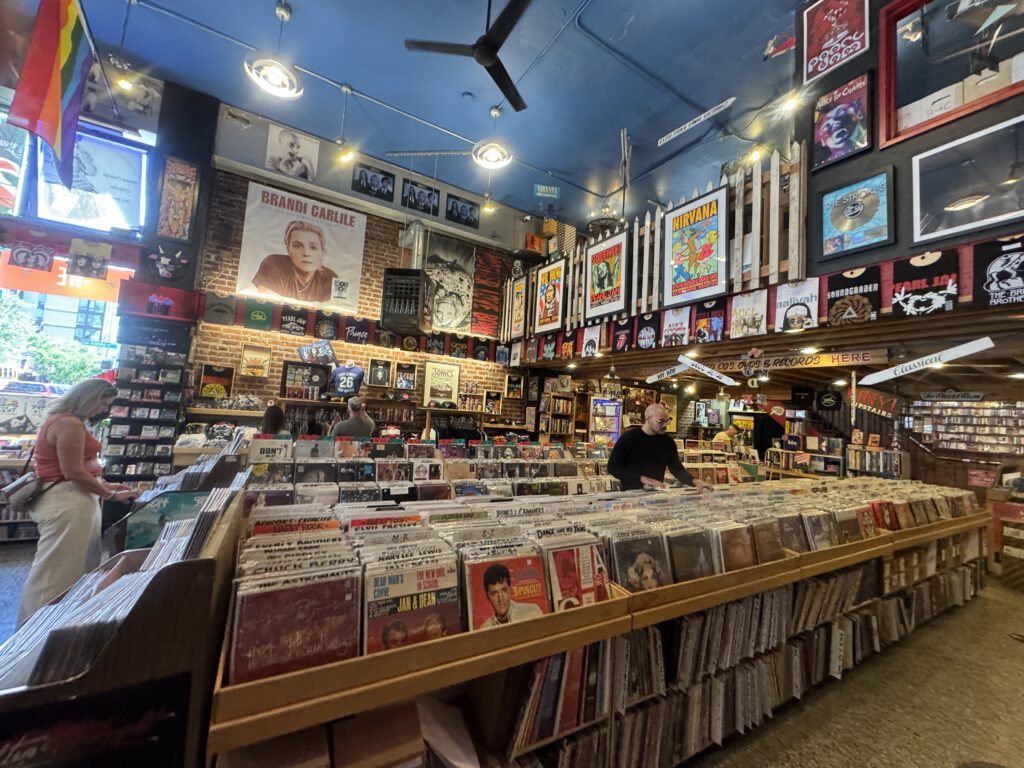
At Emerald City Guitars, you’ll find instruments owned by musicians whose stories are richer than those of most bands—and whose price tags often exceed what most musicians can afford. These vintage guitars were played by rock icons, carefully collected and restored, with every scratch serving as a relic of a concert long past. The shop is both a store and an archive of an era when casual sessions became international rock history.
Seattle’s historic Pioneer Square is home to numerous pilgrimage sites for musicians, particularly those drawn to the grunge movement of the early 1990s. The legendary Central Saloon was an early stage for Nirvana, Alice in Chains, and the Melvins, and remains a popular live music venue today. Photographs and tour posters covering the walls pay tribute to the city’s most famous bands.
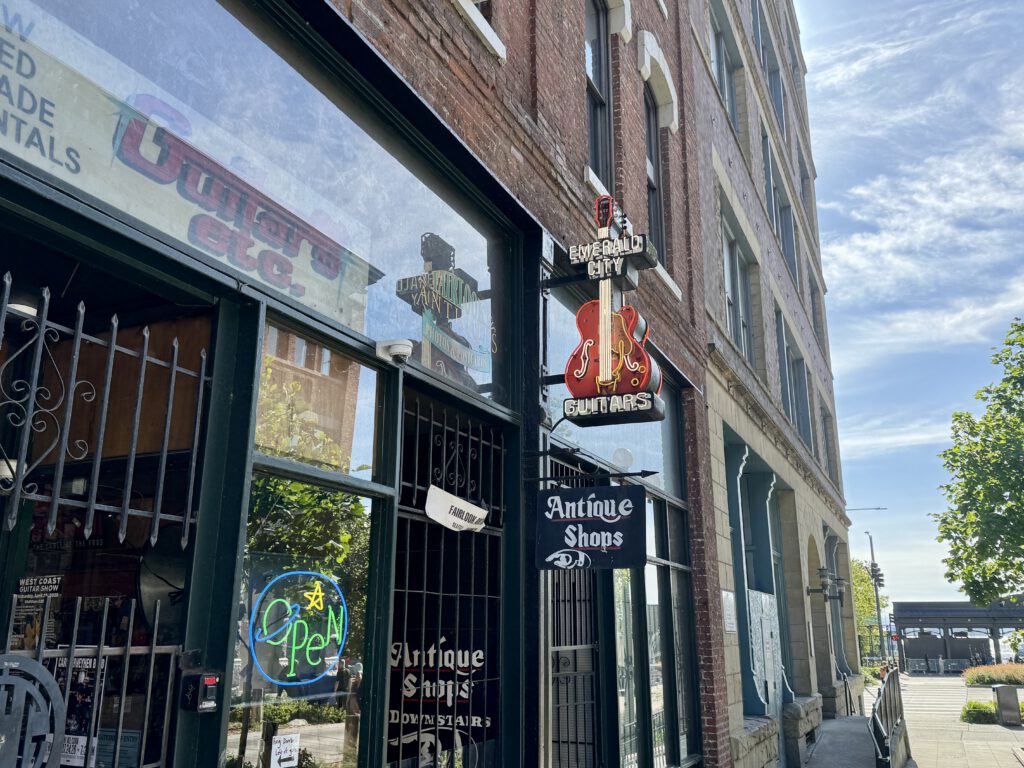
30 Years of Emerald City Guitars
Just around the corner, a small neon sign and an unassuming doorbell lead visitors into Seattle’s unique guitar sanctuary. Emerald City Guitars feels less like a traditional retail store and more like a walk-through archive of rock music.
The shop was founded in 1996 by Seattle native Jay Boone, who brought more than three decades of retail experience to the venture. His goal was simple: to build the most complete vintage guitar store in the Pacific Northwest. Today, the business is owned by Trevor Boone, while his younger brother Joey serves as store manager.
“After 30 years, we feel we’ve achieved many of our goals,” says Trevor Boone. Emerald City Guitars has established itself as one of America’s premier vintage guitar destinations, welcoming artists from around the world.
“If you’re lucky, you might run into Mike McCready from Pearl Jam or Jerry Cantrell from Alice in Chains here in the shop. Foo Fighters, Radiohead, Joe Bonamassa, Santana, Eric Clapton, Billy Gibbons, John Mayer, and many others stop by regularly.”
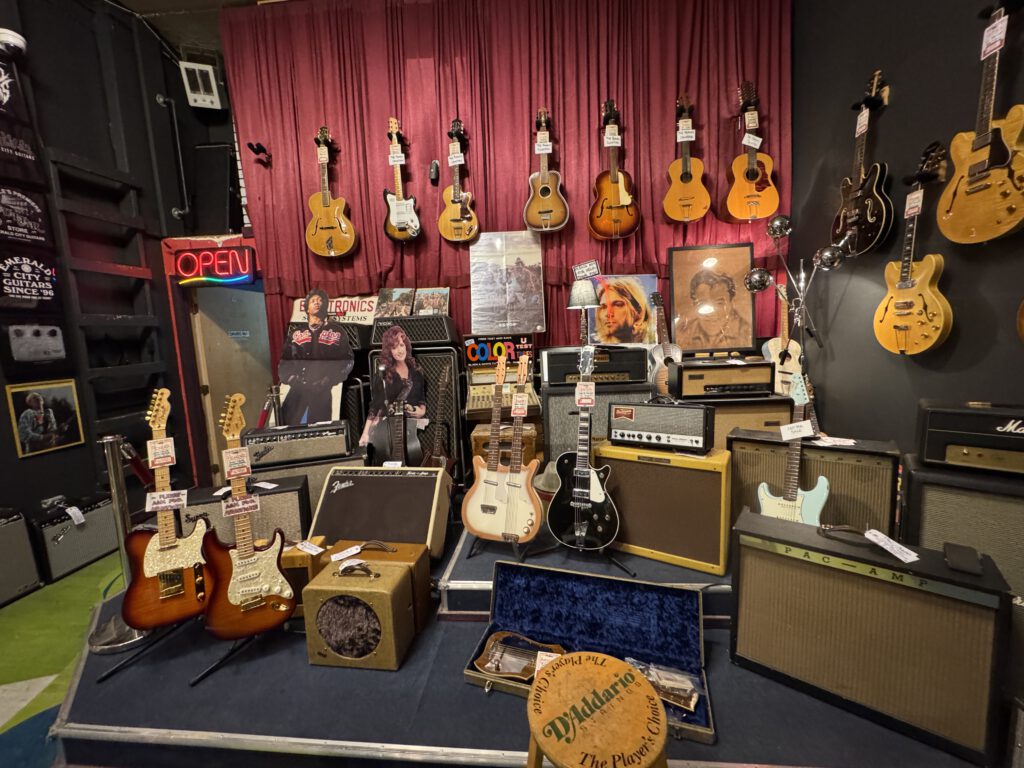
A 1966 Fender Jaguar for $99,950
Skyler Mehal guides visitors through the rooms with the confidence of a curator rather than a salesperson. Every guitar has a story. Many have been played on stage, recorded in studios, or are directly connected to Seattle’s golden era of rock.
The collection includes 1950s Gibson Les Pauls, Fender Stratocasters and Telecasters from the ’50s and ’60s, rare Gibson ES models such as the ES-335 and ES-175, and high-end vintage acoustics from Martin and Gibson.
One standout piece is an original 1966 Fender Jaguar in a rare Gold Sparkle finish—nearly sixty years old, immaculate, and virtually untouched. Price tag: $99,950.
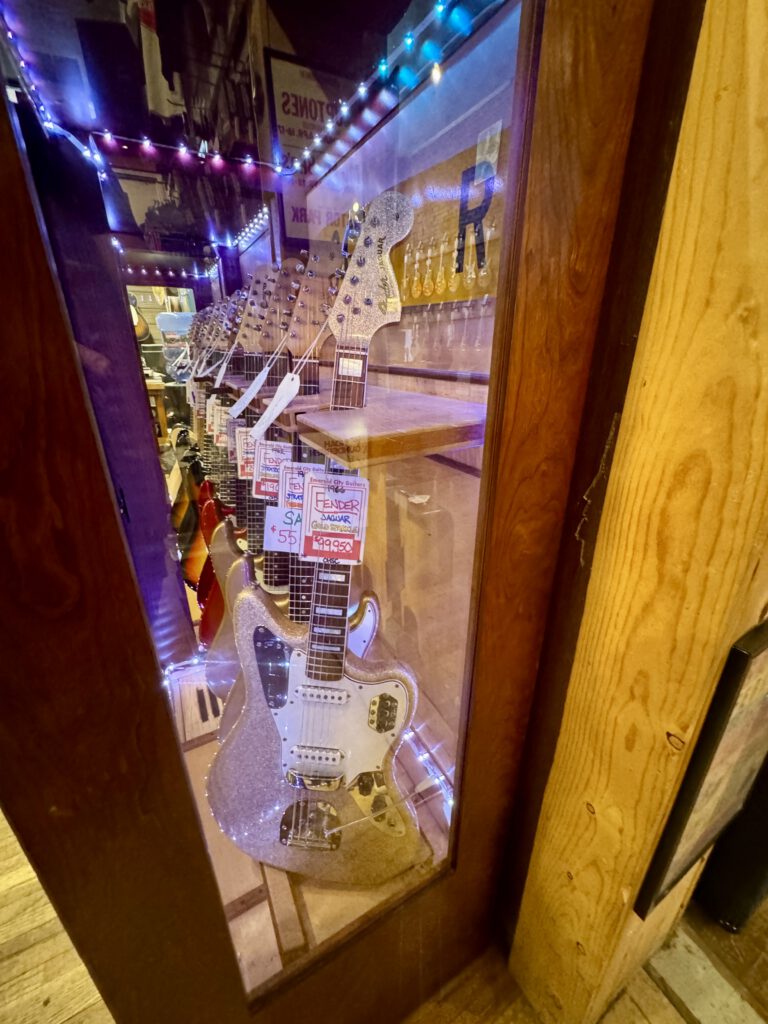
There are also priceless museum-worthy pieces, including an unsellable Gibson J-180 once owned by the Everly Brothers. Compared to Kurt Cobain’s turquoise 1969 Fender Competition Mustang from the “Smells Like Teen Spirit” video—which sold at auction for $4.5 million—it almost sounds like a bargain.
What makes Emerald City Guitars special is its proximity to legend without any theatrical presentation. No flashy display cases. No exaggerated mythology. Just worn finishes, cracked lacquer, and open guitar cases.
Additional rooms house vintage Fender amplifiers—including Deluxe Reverb and Twin Reverb-era models—as well as what Trevor calls “ultra-rare holy grail pieces.” The shop is renowned for its high-end amplifiers, including equipment worthy of comparison to the legendary Dumble amps.
Many of the guitars bear heavily worn fretboards. Some amplifiers still carry the scent of rehearsal rooms and cigarette smoke. Rare pickups and accessories are preserved as pieces of American musical history.
The Crocodile: As Rock ‘n’ Roll as a Hotel Gets
Along Seattle’s waterfront, industrial aesthetics blend seamlessly with 1990s grunge nostalgia. Just a few streets away sits The Crocodile, the legendary Belltown club where the DNA of the Seattle sound was forged.
Bands that defined grunge worldwide played here, and the venue continues to honor that tradition through new formats and events. The Crocodile Hotel extends that legacy. Located directly above the club, guests literally sleep above the echoes of a scene that reshaped rock music in the 1990s. When concerts are underway, a quiet evening before 10 p.m. is virtually impossible.
Fortunately, the hotel provides complimentary earplugs, a vending machine stocked with local beer, and a lounge equipped with a turntable and a carefully curated collection of 7-inch and 12-inch vinyl treasures. And really—who goes to bed before 10 p.m. while staying at The Crocodile in Seattle?
The Screwdriver Bar: A Rehearsal Room Turned Institution
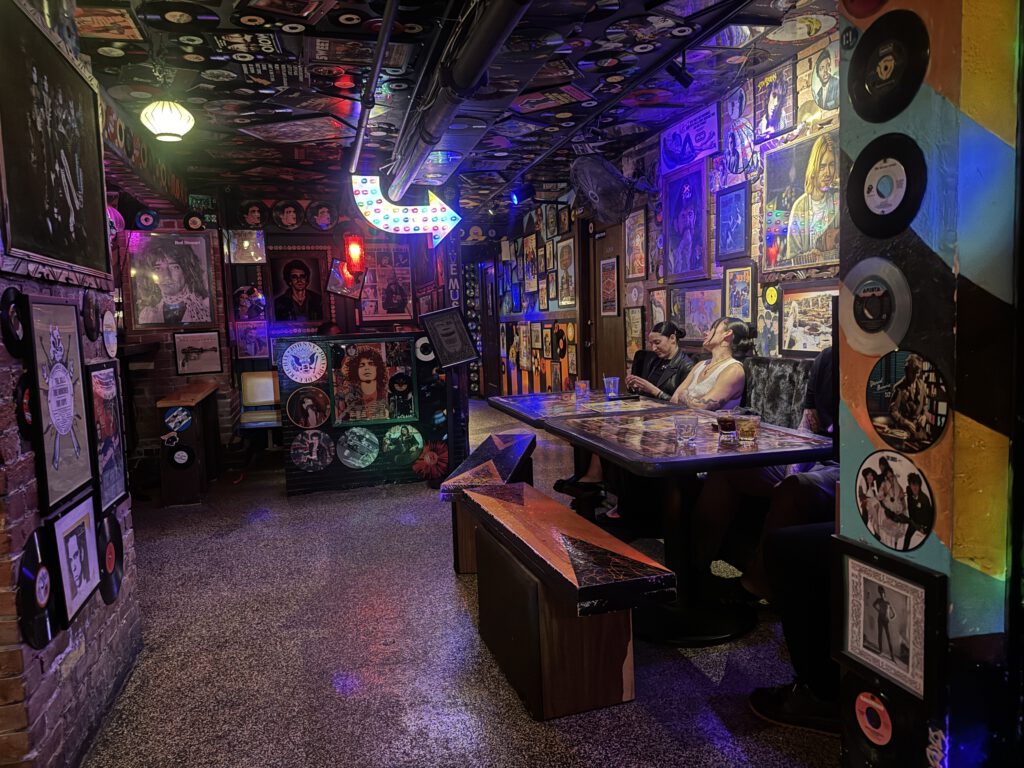
Less than two minutes from The Crocodile is the iconic Screwdriver Bar, located in a former basement rehearsal space where numerous grunge bands practiced, including Nirvana during the period between Bleach and Nevermind.
The venue also houses the Belltown Yacht Club, an underground concert space accommodating roughly 200 guests. Grammy winners, rising newcomers, and touring rock bands regularly perform here.
The club remains a vital gathering place for Seattle’s independent music community and hosts around one hundred live concerts each year.
Surrounded by countless concert posters and loud music, visitors can enjoy a three-dollar Miller High Life while sitting squarely inside Seattle’s musical history.
“The idea of listening to music, hanging out with friends, and having a drink in the exact room where bands once rehearsed and recorded has never left us,” says co-owner Dave Flatman.
The Grunge Explosion
Why did so many influential grunge bands emerge from Seattle?
“In the 1980s, many bands deliberately bypassed Seattle—it was too remote and too far from the radar of the major music industry,” explains Flatman. “That isolation became the source of the myth. A scene developed its own sound because it had to—independent, raw, and authentic.”
There was no hype and little connection to the music business. There were only rehearsal rooms, basements, small clubs, and an uncompromising do-it-yourself spirit.
Organizations such as Sub Pop, KEXP, and Easy Street Records became more than infrastructure—they became the scene’s nervous system.
KEXP & Sub Pop Records
Seattle often feels like a continuous soundtrack.
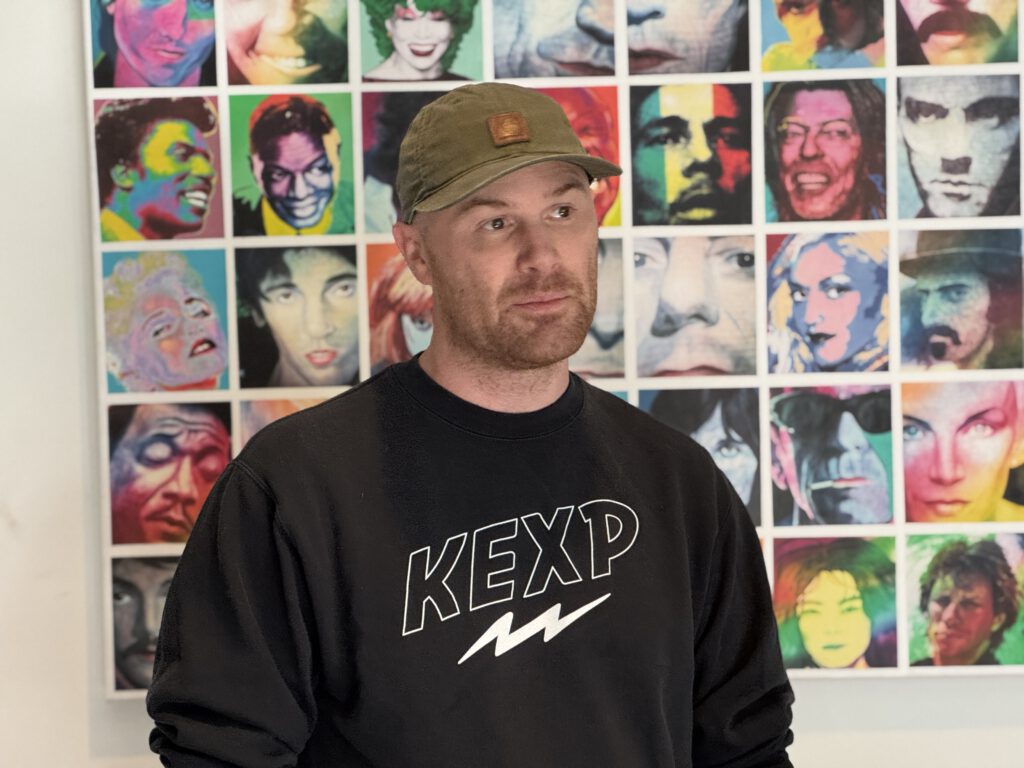
About a twenty-minute walk from The Crocodile, KEXP documents Seattle culture in real time. Founded in the 1970s as student station KCMU, it has evolved into one of the world’s most respected platforms for alternative music.
Its live sessions are more than radio broadcasts—they are intimate concerts with global reach. The station’s YouTube channel has amassed millions of subscribers, and artists including Portugal. The Man, The Lumineers, Of Monsters and Men, Phoebe Bridgers, Arctic Monkeys, The War on Drugs, and Idles have delivered memorable performances there.
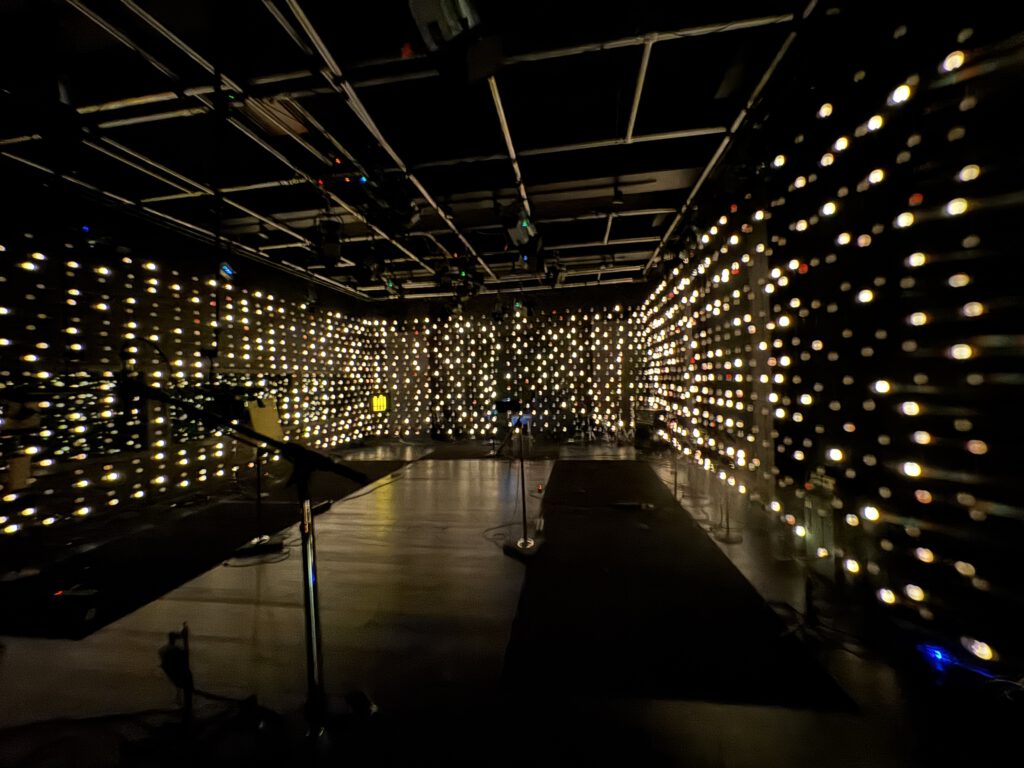
For many emerging artists, a KEXP session represents an international breakthrough. The station combines global influence, authentic live performance, and musical credibility—particularly within guitar-driven music, indie rock, and alternative genres.
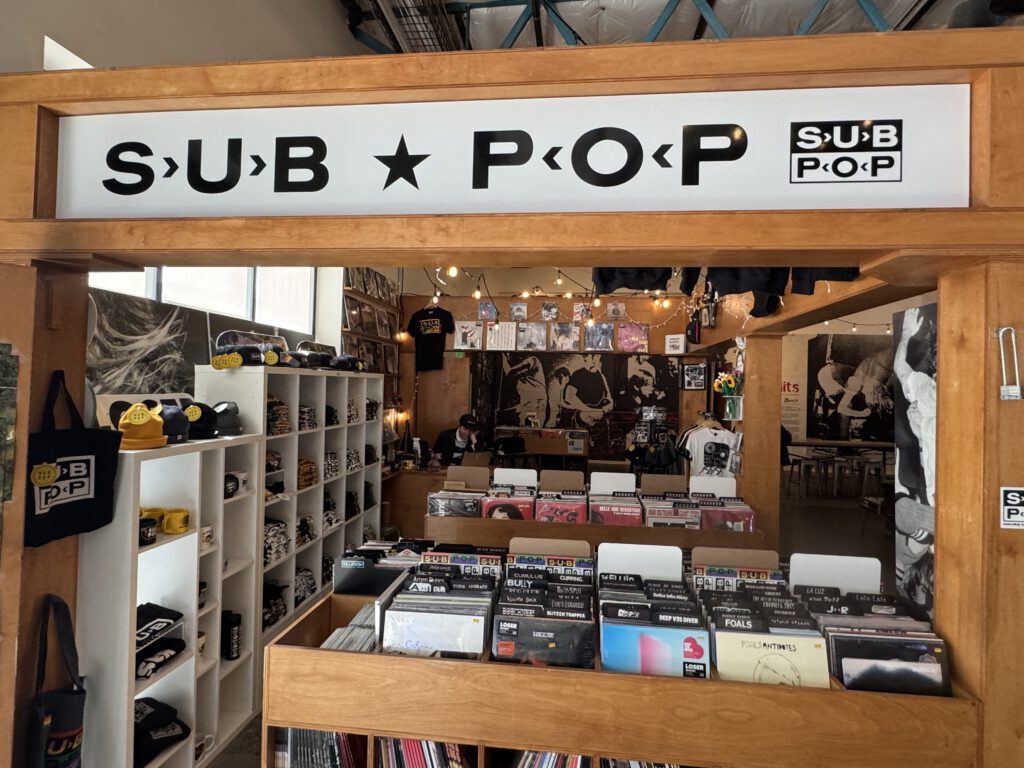
Sub Pop Records maintains a pop-up store inside KEXP’s Gathering Space, offering a curated selection of LPs, CDs, and merchandise. Early releases from Nirvana, Mudhoney, Soundgarden, and TAD established Sub Pop as the label most closely associated with grunge worldwide.
MoPOP: A Museum of Rock History
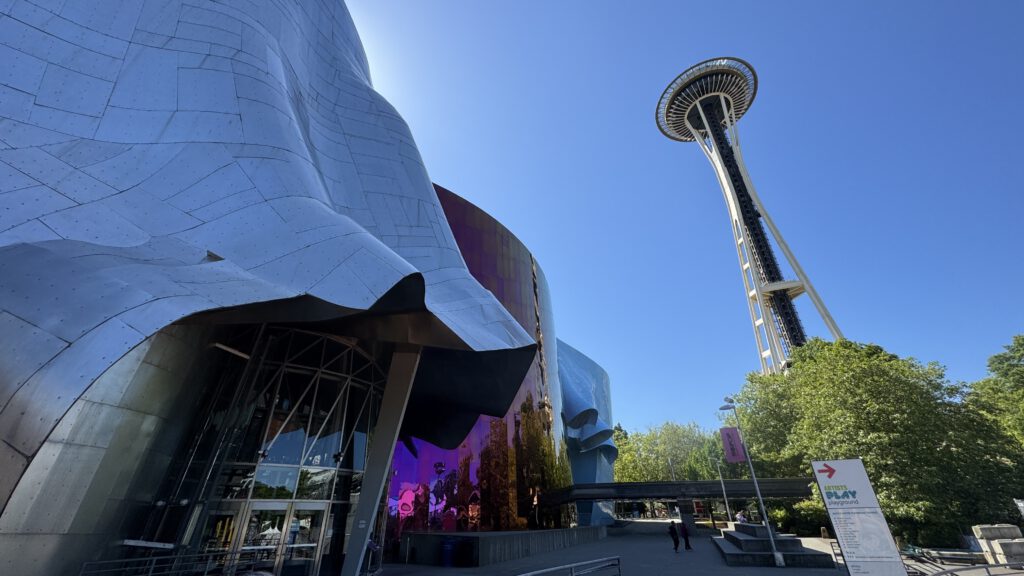
Another essential stop is the Museum of Pop Culture, located directly across from KEXP.
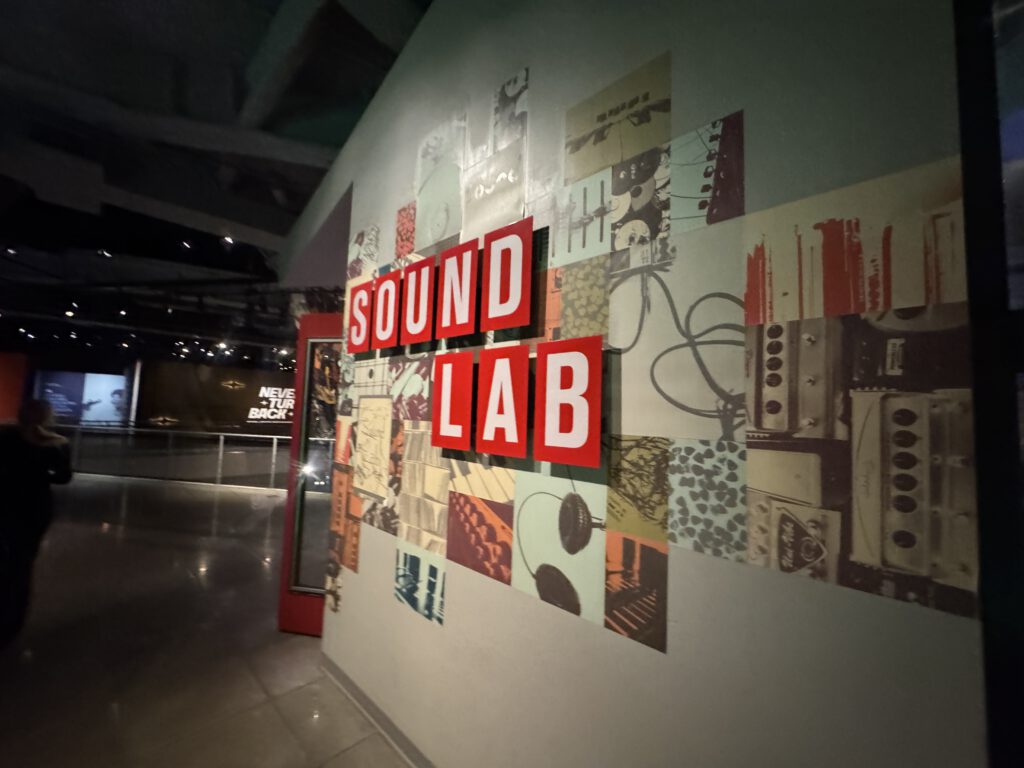
The building itself resembles a melting electric guitar sculpted from metal—an appropriate symbol for the city it represents.
MoPOP is an interactive museum dedicated to popular culture, with a strong focus on rock music, grunge, and Seattle’s guitar heritage. Exhibits include original Fender Stratocasters played by Jimi Hendrix, along with Fender Mustangs, Jaguars, and modified Stratocasters and offset models associated with Kurt Cobain.
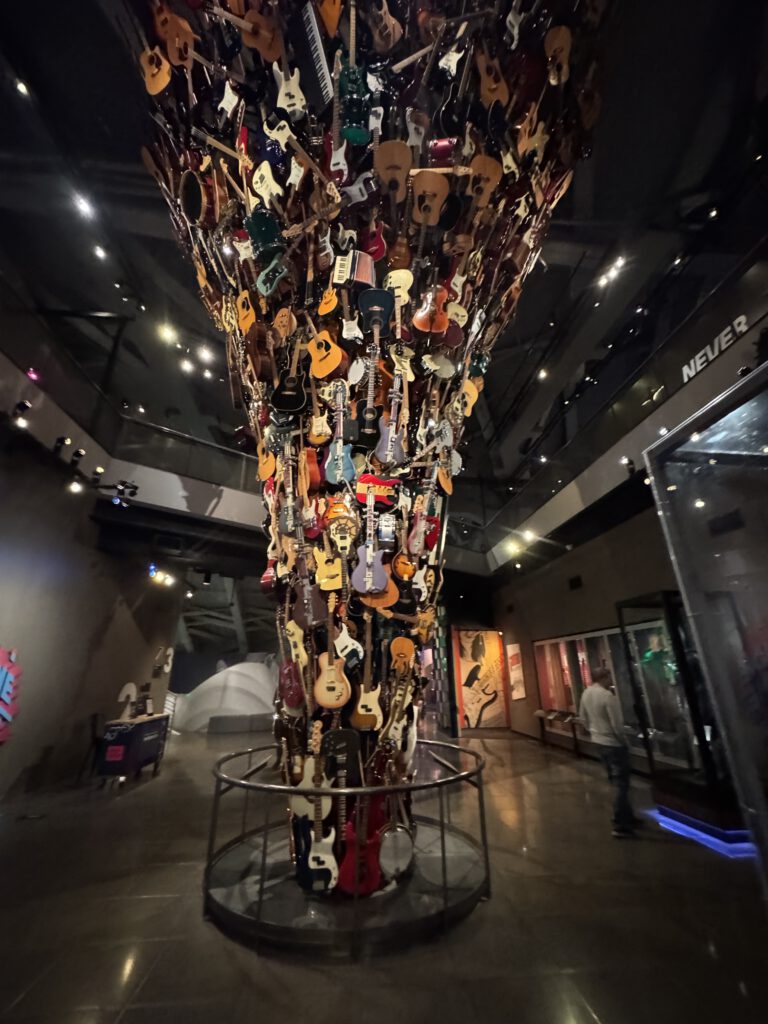
Additional displays feature stage guitars from Seattle’s grunge era, rare custom instruments, signed touring guitars, and rotating Hall of Fame exhibitions.
Grunge and the Story of Kurt Cobain
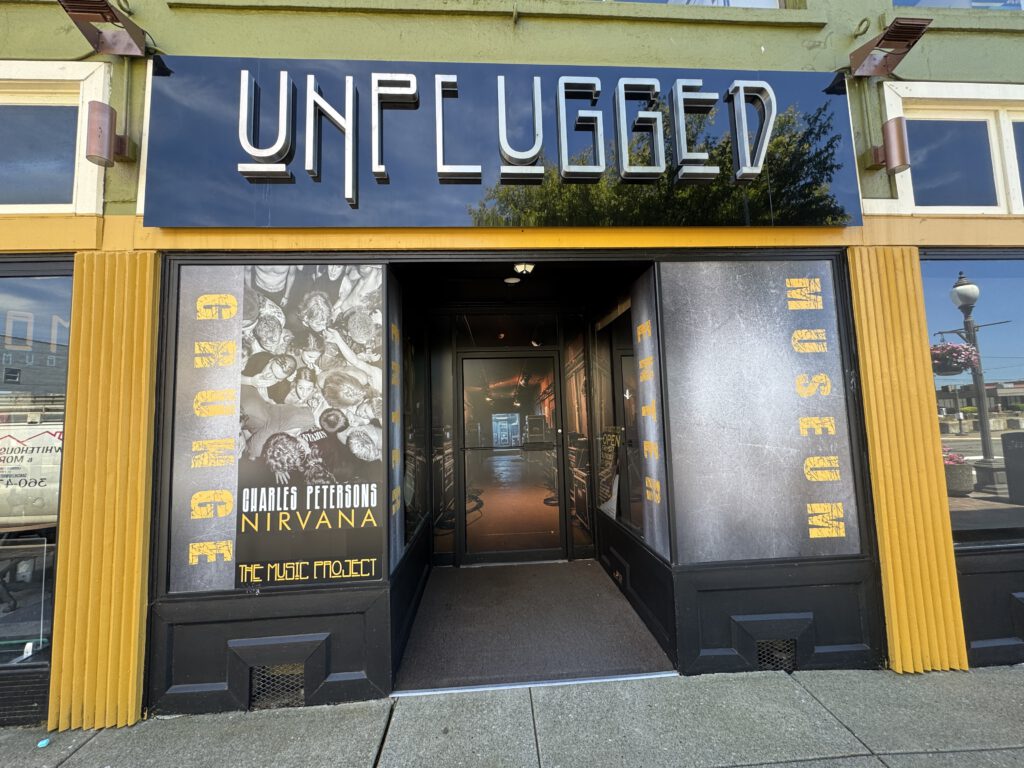
Also worth a stop is Aberdeen’s Unplugged – The Music Project. This unique “anti-museum” celebrates the grunge legacy of the Pacific Northwest and the story of Kurt Cobain. Curators Lee and Dani Bacon have created an authentic space that reminds visitors the story of grunge doesn’t end in Seattle—it continues in Aberdeen, where its roots still run deep.
Other Seattle pilgrimage sites for Nirvana fans include Viretta Park near Cobain’s former home in Denny-Blaine and the town of Aberdeen, his birthplace approximately two and a half hours away.
Space Needle, Craft Beer & Coffee
The entrance to the iconic Space Needle stands just across from MoPOP. Built for the 1962 World’s Fair, its UFO-like silhouette remains Seattle’s defining landmark.
The observation deck, 160 meters above ground, offers spectacular views of the skyline, Puget Sound, and the snow-covered peak of Mount Rainier.
Seattle feels urban and creative, yet surprisingly calm—almost Nordic in atmosphere, but infused with unmistakable American energy.
Beyond its musical heritage, Seattle boasts one of America’s most celebrated craft beer scenes, with roughly 70 breweries operating within the city. It is also one of the nation’s coffee capitals, home to nearly 50 active roasters.
“Starbucks was founded here in 1971 and helped create a new coffee lifestyle through innovative store concepts and high-quality beans,” says Seattle Coffee Tour guide Scott.
Easy Street Records
The perfect finale to Seattle’s musical journey is Easy Street Records in West Seattle.
More than a record store, it functions as a vibrant ecosystem combining vinyl shop, café, bar, bistro, and intimate live venue.
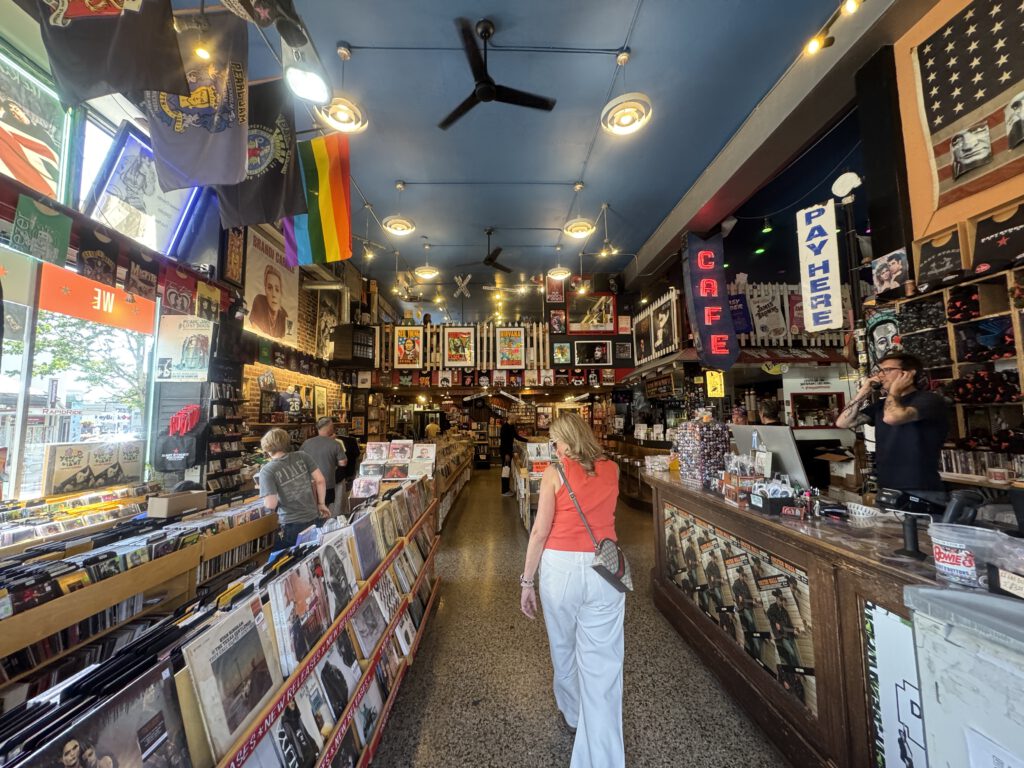
Opened in 1988, Easy Street is deeply rooted in the local music community and closely connected to Seattle’s grunge heritage. Pearl Jam famously played a guerrilla-style performance there, while artists such as Lou Reed, Elvis Costello, and Patti Smith have all appeared on its stage.
Many consider Easy Street one of America’s greatest record stores. Even Rolling Stone has ranked it among the country’s best—not only because of its selection, but because of the energy that exists between the shelves, the bar, and the stage.
Live performances, special events, surprise gigs, collector conversations, and endless music recommendations happen daily.
Pair it all with an ice-cold “The Bar Is Open IPA”—brewed exclusively for Easy Street Records—and one thing becomes clear:
Seattle rocks.
EMERALD CITY GUITARS www.emeraldcityguitars.com
KEXP www.kexp.org
SUB POP RECORDS www.subpop.com
MOPOP www.mopop.org
THE CROCODILE www.thecrocodile.com
CENTRAL SALOON www.centralsaloon.com
SCREWDRIVER-BAR & BELLTOWN YACHT CLUB www.screwdriverbar.com
EASY STREET RECORDS www.easystreetonline.com
TOUR & TASTE, COFFEE CRAWL www.eatseattletours.com
BALLARD BREW PASS & CRAFT BEER TOURS
www.visitseattle.org/food-drink/beer-breweries/ballard-brewed-pass
THE ANTI MUSEUM, Aberdeen’s Unplugged, The Music Project
https://www.themusicproject.org
VISIT SEATTLE MIX TAPE AUF SPOTIFY
https://open.spotify.com/playlist/2e3SatFGq4FvVfWnmrDCwP?si=1c915814269a4f0f
VISIT SEATTLE www.visitseattle.org
STATE OF WASHINGTON TOURISM https://industry.stateofwatourism.com
PORT OF SEATTLE https://www.portseattle.org/tourism
You may also like
-
Its name implies no real Player should even think about it for a split second: Loopy Pro!
-
Audeze LCD-S20 – Precision headphone monitoring for a perfect “pocket”, intonation, and no bleed!
-
The Headphone Dilemma! For Recording, Mixing, Mastering – The Audeze MM-100 is the budget friendly solution.
-
Fiedler Audio Launches Mastering Console 2.0 — A truly game-changing Major Upgrade to Dolby Atmos Mastering
-
Fiedler Audio armada wraps VST3 Plug-Ins for any Immersive Format